
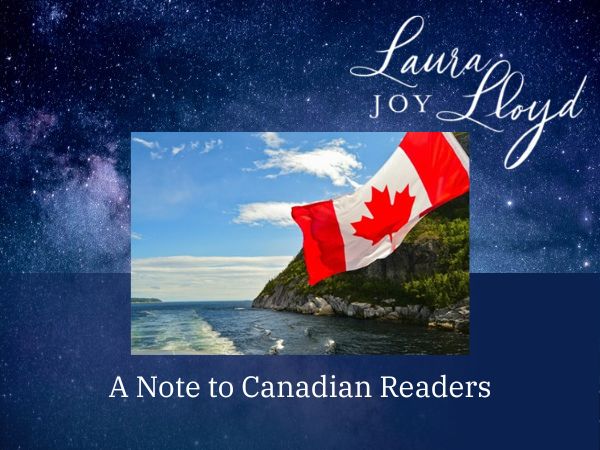
Dear Canadian Reader,
First, I want you to know that I’m grieved to see the U.S.’s political activities wreaking havoc on our closest neighbors and around the world. I’m sorry for the broken relationships, unfulfilled promises, and disrespectful threats. I understand why a note from a fledgling American novelist might not hold appeal, despite the author also being a citizen of Canada. But I write stories about hope, and hope will be the theme of this note too.
People often ask if Wren Island, the setting for my first two published novels, is a real place. Geographically it’s based on Washington’s San Juan Islands and British Columbia’s Gulf Islands. (Sometimes people familiar with these islands don’t believe me when I say that Wren Island is fictional. They’re certain I’m writing about a specific real island they know and love!) You won’t find Wren Island on any world map, but it does exist. We find it whenever we imagine what could be. Whenever we reach for courage, anticipate joy, trust in love, hope for something better. And long before readers started calling it the Wren Island spirit, the first inklings were taking shape.
When I was growing up, I was enthralled by my dad’s stories about his childhood summers spent on Saturna Island in British Columbia’s Gulf Islands. Dad’s maternal grandparents, a physician and a nurse, established one of the first pharmacies in Victoria to include natural remedies from Indigenous Peoples, then retreated from city life and settled on Saturna. When WWII ended, my dad’s uncle, a RCAF fighter pilot, and his young wife, a London socialite, also moved to Saturna, where they built and lived in a cabin without electricity or running water.
When my dad was one year old, his father was killed in a Victoria shipyard accident. My dad’s widowed mother, a nurse like her mother, continued living and working in the city. Every summer, she sent her three small children to be with her family on Saturna.
Dad recalls picking ripe apples from the homestead’s orchard. Endless huckleberry pies, jams, and pancakes. On the kitchen windowsill, a dish for collecting pearls found while shucking oysters. One small dinghy, two young brothers, a boatload of salmon. Orcas meandering close enough to mist the boys with their breath. A legendary Chesapeake Bay Retriever named Ace accomplishing larger-than-life feats, like saving my dad from drowning, pulling an islander to safety during a wildfire, delivering messages and supplies (even fresh meat from the butcher, still neatly wrapped).
When my dad’s mom eventually remarried, her husband promptly emigrated his new family to the U.S. Decades would pass before Dad revisited the oasis of his childhood summers. Meanwhile, he raised the next generation to enjoy and appreciate nature. In 2004, my sister and I in our late twenties and early thirties, Dad arranged for several of our family members to visit Saturna Island together. Our ancestral property had become part of the Gulf Islands National Park Preserve. On its website, Parks Canada describes Narvaez Bay as “one of the most beautiful and undisturbed bays in the southern Gulf Islands.”
Even as I anticipated the visit, I braced myself for disappointment. Surely the Saturna Island of today, untouched as it might be, couldn’t possibly live up to the grand descriptions of a grown man remembering idyllic childhood summers?
Once there, I relished the warm sun piercing through exceptionally clean air. The whispering breeze speaking through evergreen treetops. Endless crystal-blue water surging below a rocky cliff. Harbor seals bobbing among floating bull kelp. Tall grasses bent to the east, yielding to an unending wind from the west. Feral goats scampering across trails too risky for humans. Crows and ravens calling from the forest. Blooming wild roses perfuming the air.
As a family, we explored the remains of the ancestral cabins. Ate lingering apples from the old orchard. Delighted in finding sea glass and shells on the beach. Considered the marvelous resilience of a single arbutus tree clinging to a boulder out over the ocean, its exposed roots gnarled and weathered.
Hearing the call of a bald eagle, I looked up. Held my breath as one, two, three eagles flew so close I heard the wind whistle through their flapping wings. An unexpected revelation—it seemed a spiritual message related to my faith, the eagles, and my ancestors all at once—filtered into me.
This is where I belong.
I’d never understood when people said one geographical location or another had a hold on them. Now, I was certain that, of all the extraordinary places in the big wide world, I was inextricably tied to this bit of soil, the majestic cliff overlooking Narvaez Bay.
When I returned to my home in Philadelphia a few days later, I wrote the first chapter of a novel that would become part of a series set on islands like Saturna—though the first book in that series wouldn’t be published for another twenty-some years.
Novels featuring the setting as a character had always fascinated me, so I tried my best to create a Saturna-like experience for my readers. Deep, evergreen forests and high, rocky cliffs. Thundering surf on the west side, sheltered bays on the east side. Wild, roaring windstorms and clear, starry nights. Birds (lots of birds!). And whales, including the highly endangered Southern Resident Orcas singing into an underwater microphone.
While I wrote, British Columbia’s beloved Emily Carr grabbed my attention. I studied Carr’s artwork, read her fictional stories, and pored over her journals, awed by how real-life experiences can influence artistic efforts. I reread childhood favorites by Lucy Maud Montgomery, discovered the author’s journals, then visited her historic green-gabled home on Prince Edward Island. Later, Alice Munro’s short stories and Louise Penny’s mysteries gave me more glimpses of Canadian writers.
For years, Dad had gently reminded me that although born in the U.S., I was also born Canadian and could claim citizenship at any time. Feeling it a momentous decision, I put it off—until the 2012 U.S. presidential election season, when it dawned on me that I might very much want to rely on another home country someday. And not just any country, but Canada, who I’d grown to love, respect, and be inspired by.
I submitted the necessary paperwork. Received documentation that I was indeed officially Canadian. No need to earn passing marks on a test about Canada’s history, political structure, and geography. I’m still embarrassingly inept in my knowledge of Canada and her ways, though I anticipate a lifetime of happily learning more.
Now I spin stories about sharing life with people we love (and people we find difficult to love!). Wren Island stories are about offering second chances to others and accepting second chances for ourselves. They’re about reaching for love—the very best, true, steadfast kind of love—and trusting that we’ll be better for having done so.
I’m glad you’ve discovered Wren Island, because the first inklings of these uplifting stories fluttered to life on Canadian soil, in a Canadian forest, surrounded by a Canadian sea.
Here with you,
Laura
P.S. Want to bring Wren Island novels to a library or bookstore in Canada? Find handy links here.
(This note was first published in May 2026. Wren Islanders get newsy notes like this directly in their inboxes! Become a Wren Islander.)
[Photo courtesy of Unsplash.]